Over Instructables, a guy shows how he used a laser etching mechine to tattoo himself. Such a crazy idea! Well, some people use laser to remove tattoo, while others use laser to tattoo…
He describes:
The sound by itself (meaning no body parts in the cutter), is probably the easiest thing to deal with. It is just the normal whine of gears, belts and cooling fans. When that sound is mixed in with the sensation of burning flesh, it turns the laser cutter from a simple machine shop tool to a futuristic torture device.
The sight is not too bad, just a light tracing its way back and fourth across the body. As long as you don’t think about the fact that the small wisp of smoke trailing the light, is actually vaporized skin, everything will be fine.
The smell is bad. It does not travel far, but when you catch a whiff of the burnt flesh stench, it is quite nauseating. The thought that you have just inhaled some of those vaporized skin flakes, and they have settled on the bottom of your lungs, is the worst.
– 532nm green, set to 40mW, analogue (cheap Chinese DPSS without TEC)
– 660nm red, set to 100mW, analogue (Brenner diode from Pioneer DVR-110)
– 405 nm blue, set to 20mW, analog (xbox360 drive)
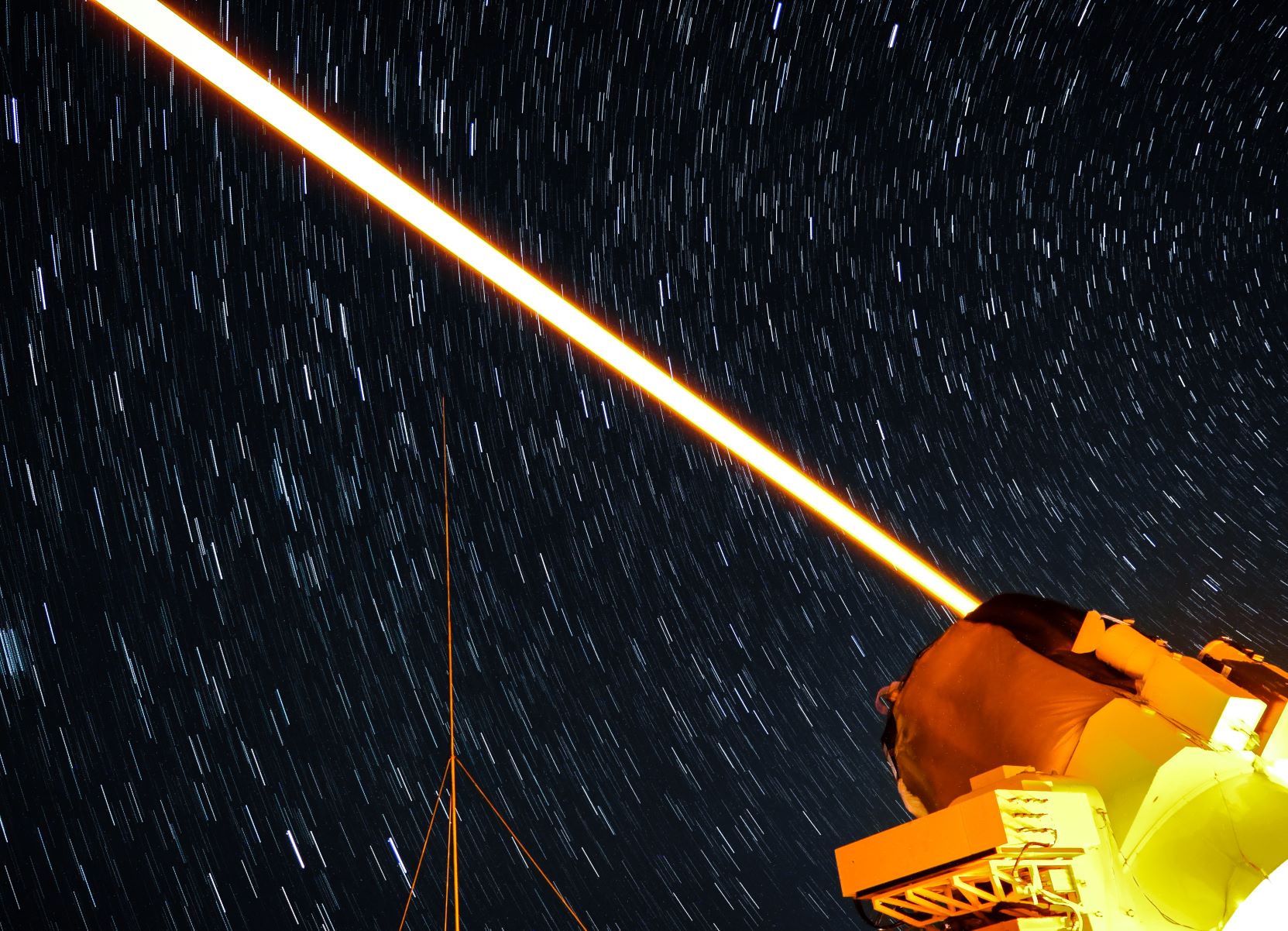
Green laser technology that sweeps airport runways to scare away birds could help regional civil aviation authorities to combat a large threat to aircraft safety during take off and landing. Bird and wildlife strikes to aircraft costs the US civil aviation industry more than US$600 million annually, while 220 people have been killed world-wide as a result of bird strikes in the last 20 years. More at Lord Ingenierie
What happens when a high-power laser weapon strikes human flesh? This is the topic addressed in a paper for the Air Force office of Scientific Research with the title, “Laser Induced Shock Waves and Vaporization in Biological Systems.” It’s all about computer modeling the effects of laser pulses:
In order to cause damage to the absorbing material, the electromagnetic energy of the laser pulse must be converted to thermo-mechanical energy. We have developed a computational model that allows the calculation of damage resulting from a laser pulse of any duration or energy due to temperature rise, explosive bubble formation, and shock wave production. We have discovered that the system exhibits chaotic dynamics….
We also discovered resonant effects in laser absorption and damage that allow the duration between pulses to be tuned to channel a greater or lesser fraction of the absorbed energy into shockfront and bubble production. This allows the delivery of large amounts of laser energy to produce strong thermal effects while suppressing unwanted pressure effects, or vice versa.
Australian artist Chris Poole has DIYed a different kind of laser graffiti device, compared to Graffiti Research Lab’s, as reported by Popular Science.
How it Works
BRIGHTNESS: The laser uses about 60 milliwatts, which can project an image up to 100 feet away, but Poole could easily substitute a laser with a range of as much as 400 feet.
FOCUS: By moving the salvaged camera lens—the last part that the laser shines through—forward or back, Poole can easily adjust the focus of the projected picture.
PORTABILITY: Poole can rejigger the parts to fit into a small case. The light bounces between a set of mirrors, then through the slide, a camera lens, and a hole cut into one side. He hasn’t used it much, however, since he’s been told it looks like a suitcase bomb.